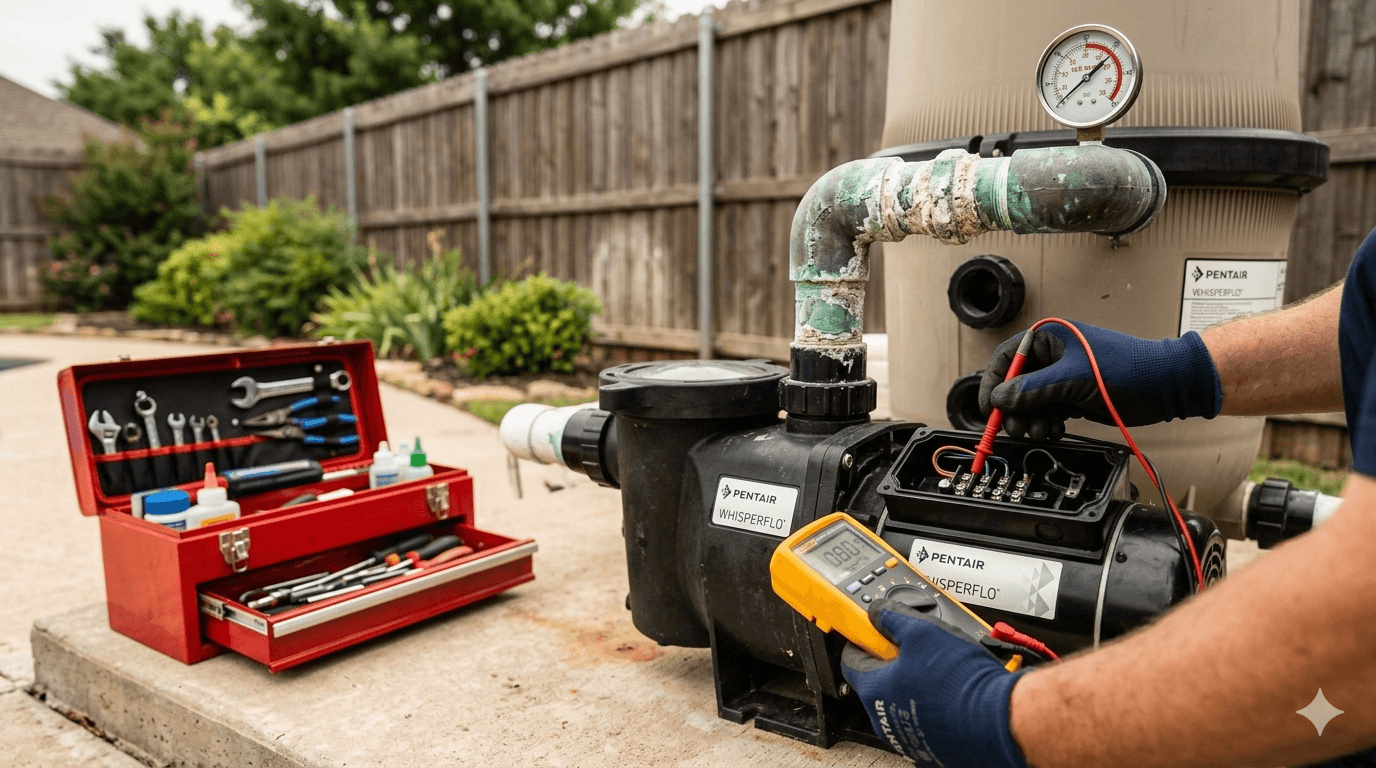
Pool equipment degrades gradually — which means there are usually warning signs before a failure. The problem is most homeowners don't know what to look for, and by the time the pump stops working or the heater throws an error code, the repair is bigger and more expensive than it needed to be. Here are five things to watch for.
1. Reduced Water Flow
If your returns feel weaker than usual or the pump is running louder, restricted flow is likely. Common causes: clogged pump basket, dirty filter (cartridge or DE), or a developing impeller issue. Don't ignore it — running a pump dry or against excessive resistance shortens its lifespan significantly.
2. Air Bubbles in the Returns
Air bubbles coming through your return jets mean air is entering the suction side of the pump — usually at a fitting, valve, or the pump lid o-ring. Left unaddressed, this can cause the pump to lose prime entirely and run dry.
3. Heater Short-Cycling
If your heater fires up and shuts off after only a few minutes without reaching the set temperature, it's short-cycling. This can be a flow issue, a dirty heat exchanger, a failing pressure switch, or an early sign of a more serious component failure. Short-cycling heaters are inefficient and the symptom rarely resolves on its own.
4. Cloudy Water That Won't Clear
Persistently cloudy water after a correct chemical balance is usually a filtration issue — most often a cartridge filter that needs cleaning or replacement, or a DE filter that needs a fresh charge. Filtration problems stress the pump and the water chemistry equally.
5. Higher-Than-Normal Chemical Use
If you're burning through chlorine unusually fast and your pool is on a service plan, your technician will flag it in the report. Off a plan, watch your stock yourself. Rapid chlorine consumption usually points to CYA (cyanuric acid) levels that are either too low (burning off fast in sunlight) or paradoxically too high (causing "chlorine lock"), or to an algae bloom that hasn't surfaced yet.